Download Brochure
9 min read
2026-03-10


Share
Real estate portfolios are built upon layers of calculated risk. Across generations and varying market cycles, one specific asset class consistently anchors these portfolios: land.
While constructed buildings physically degrade over time and architectural trends inevitably shift, land holds a uniquely resilient position in the financial landscape.
Its enduring appeal is rooted in fundamental economics and long-term scarcity, rather than passing market trends or short-term buyer sentiment.
In financial terminology, the word "safe" requires a precise definition. It rarely means entirely risk-free.
Every investment carries inherent variables. In the context of real estate, safety translates directly to capital preservation, lower volatility, and long-term value holding.
Land behaves fundamentally differently from other asset classes.
It is not subject to the same immediate market corrections that impact high-density commercial leases or speculative apartment launches.
It absorbs economic shocks more resiliently because its value is tied to the ground itself.
However, while land is often perceived as safe, many investments fail basic due diligence checks when buyers misunderstand the asset.
True safety is a byproduct of rigorous evaluation, not a default characteristic of all soil.
The most potent driver of value in any economic model is scarcity.
You cannot manufacture more earth. As urban corridors expand outward and populations grow, the pressure on available, habitable parcels intensifies.
While developers can construct high-rise towers to multiply the usable square footage vertically, thereby adding rapid supply to a micro-market, horizontal land supply remains rigidly finite.
This absolute limit on supply, especially within established or rapidly growing infrastructure corridors, ensures that demand consistently outpaces availability.
This fundamental imbalance provides a natural floor for land valuation, protecting the asset from severe downward pricing pressure.
Physical depreciation heavily impacts built property. Concrete ages, plumbing systems fail, and interior designs become obsolete.
A built asset requires constant capital injection to maintain its market relevance and rental yield.
Land, conversely, requires zero structural upkeep.
It remains completely intact regardless of the decades that pass.
Its valuation is inherently tied to its location, the surrounding civic development, and zoning laws, rather than the physical condition of a structure.
Holding an asset that does not decay eliminates one of the largest long-term cost burdens associated with traditional real estate ownership.
A plot of land offers unparalleled flexibility. It functions as a financial blank canvas.
An owner can choose to commission a residence immediately, wait a decade to build a retirement home, or simply hold the asset vacant as a pure wealth-preservation strategy.
This adaptability makes land highly responsive to different life stages and shifting financial goals.
If market conditions favor holding, the owner waits. If personal circumstances dictate a custom-built home, the ground is ready.
This inherent "option value" gives the landowner complete control over the timing and nature of their capital deployment.
The operational reality of traditional real estate is complex.
Owning an apartment or commercial space often involves continuous tenant management, addressing urgent repair requests, and paying substantial maintenance fees to a governing society.
Land is a remarkably clean asset to hold.
It involves minimal holding costs, generally limited to basic property taxes.
It removes the friction of managing a physical structure or dealing with temporary occupants.
For investors seeking a passive asset that requires no monthly operational oversight, land offers a streamlined, low-complexity holding experience.
Historically, land serves as a superior vehicle for long-term wealth preservation.
Its appreciation trajectory aligns closely with the macro-level expansion of civic infrastructure.
When a government announces new highways, transit nodes, or economic corridors, the underlying land captures that value multiplier first.
It functions best as a patient, long-term asset held over a decade or longer, rather than a speculative vehicle for a short-term flip.
The wealth generated from land is usually slow, steady, and compounded by the gradual maturation of the surrounding urban grid.
There is a distinct generational component to land ownership.
It carries a psychological and emotional weight alongside its financial utility.
Families have historically passed down plots of land because the asset remains stable and universally valuable across generations.
It offers descendants a secure foundation.
They inherit an asset that they can either liquidate for significant capital or use to build a family estate.
This stability across decades makes land a preferred instrument for individuals looking to secure their family's financial future long after their own active earning years have concluded.
The assumption that all land is inherently safe is a dangerous fallacy.
Scarcity alone does not create value; planned growth does.
Buyers frequently make critical errors by purchasing unplanned or unapproved parcels on the city's extreme fringes, assuming urban expansion will eventually justify the investment.
They often ignore the complete absence of underlying civic infrastructure, chase cheap per-square-foot pricing over legal quality, and overlook strict zoning restrictions.
Agricultural land or parcels caught in title disputes can trap capital for decades.
A bad land investment, fraught with legal ambiguity or lack of physical access, is an exceptionally high-risk liability.
Safety is entirely dependent on the quality of the acquisition.
This realization regarding risk has driven a massive shift in buyer behavior.
Modern investors recognize that raw, isolated land carries unacceptable variables.
The preference has decisively moved toward purchasing plots within structured environments.
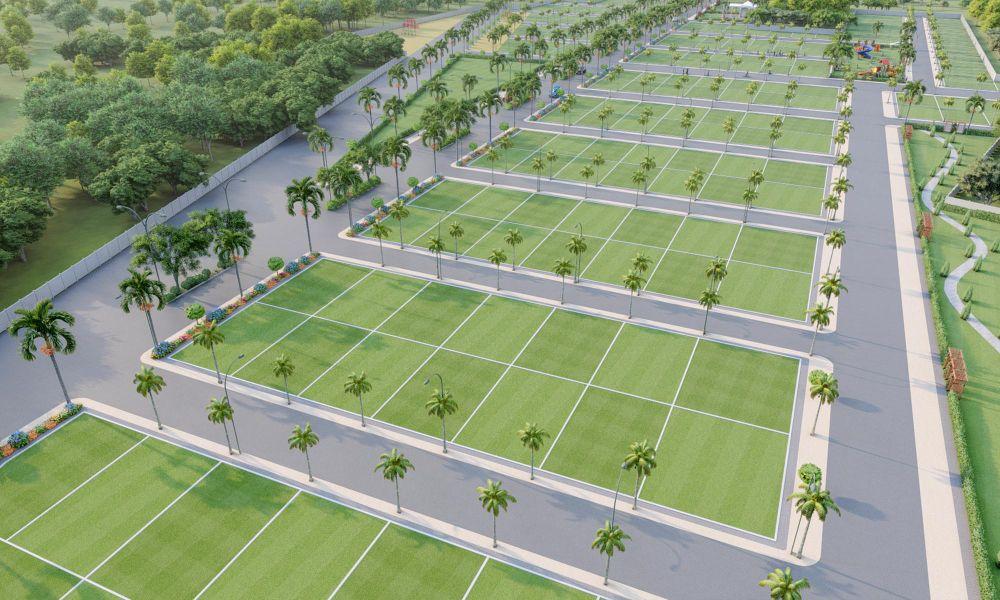
Buyers now strongly favour RERA-approved, infrastructure-ready plots in integrated townships.
A structured plot inside a master-planned community provides absolute legal clarity, immediate access to civic utilities, and physical security.
It effectively bridges the gap between the fundamental stability of owning the earth and the convenience of modern urban planning.
Buyers are willing to pay a premium for this certainty, knowing that structured land is vastly superior to random land parcels.
Safely acquiring land involves considering the entire ecosystem surrounding the plot.
A development like Trident Parktown illustrates this disciplined approach to land ownership.
Purchasing a residential plot within a 125-acre master-planned environment removes the traditional friction and ambiguity of buying land.
The infrastructure is clearly defined and executed upfront.
Wide arterial roads, underground utilities, and distributed green spaces are already integrated into the master plan.
The buyer is acquiring a designated piece of an evolving, secure ecosystem rather than an isolated, vulnerable parcel on the highway.
The township's long-term development vision actively protects the structural integrity and future value of each plot.
Stability in real estate is never an accident.
It is the result of aligning capital with undeniable economic fundamentals.
Land remains highly relevant because it aligns perfectly with long-term, patient thinking.
It is an asset class that demands foresight and rewards rigorous evaluation.
True safety in land investment is achieved only when three critical factors align: acquiring the right parcel, ensuring rigorous planning and legal clarity, and holding the asset for the proper time horizon.
When approached with this analytical mindset, land rightfully retains its position as the safest and most enduring foundation of any property portfolio.
Blogs
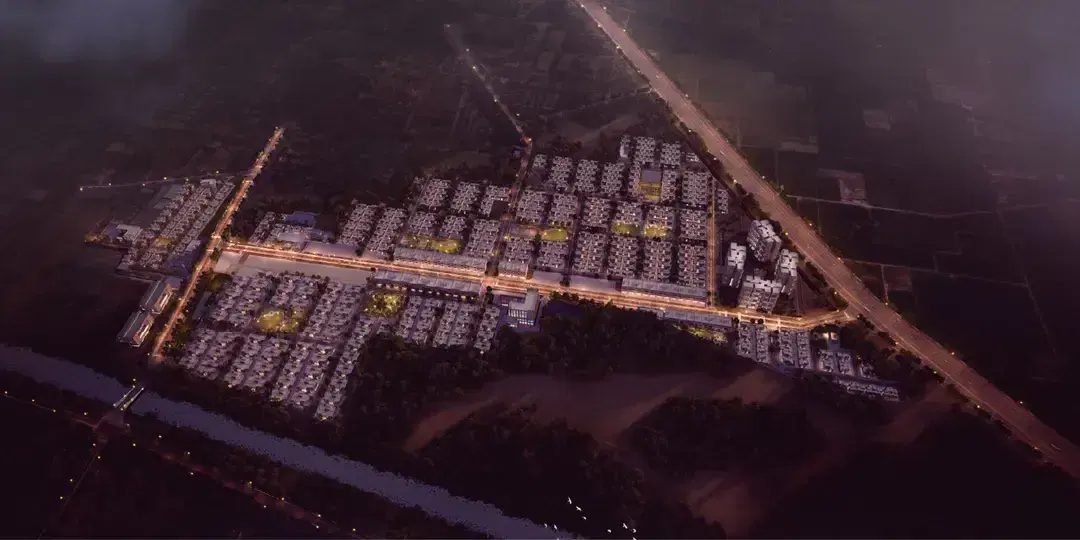
A Township Inspired by the Seven Chakras: A Life in Balance
As cities expand and lifestyles accelerate, residential planning is being challenged to balance physical comfort, mental clarity, and social continuity within everyday living.
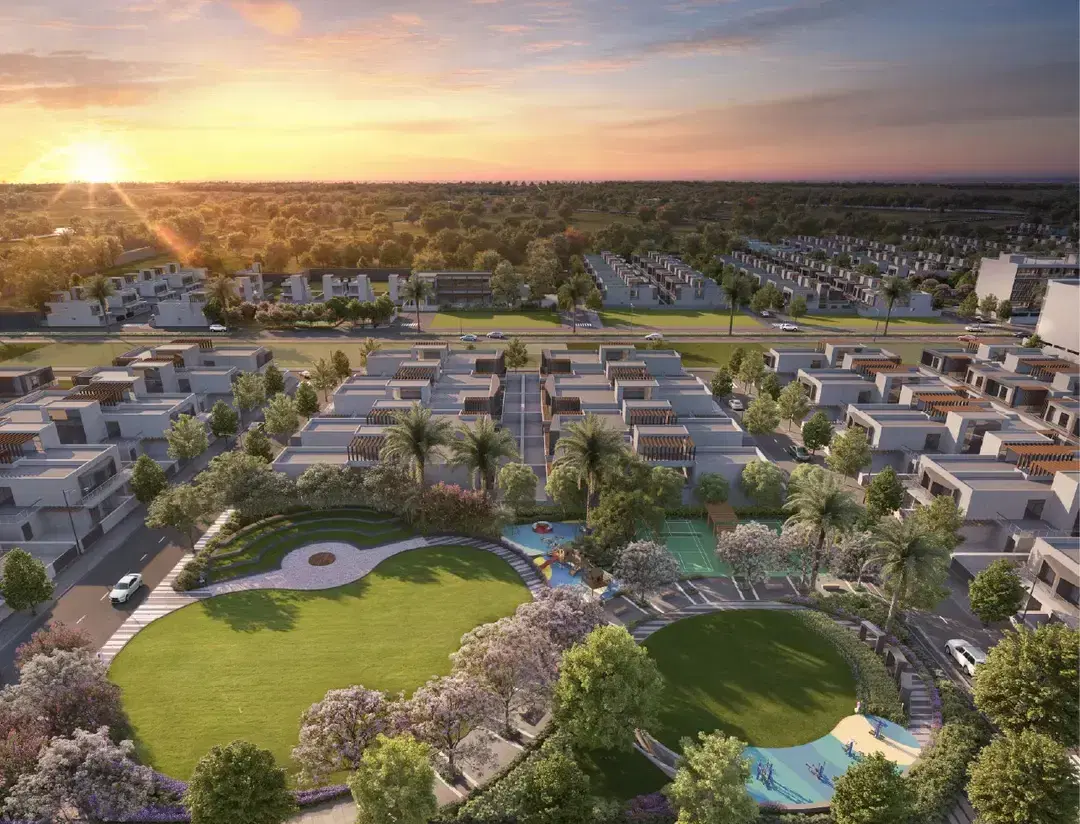
Trident Parktown: Where Nature, Nurture & Community Unite
A conscious departure from high-density urban living, Trident Parktown is shaped by a three-leaf philosophy that brings nature, nurture, and community together into a balanced way of life.
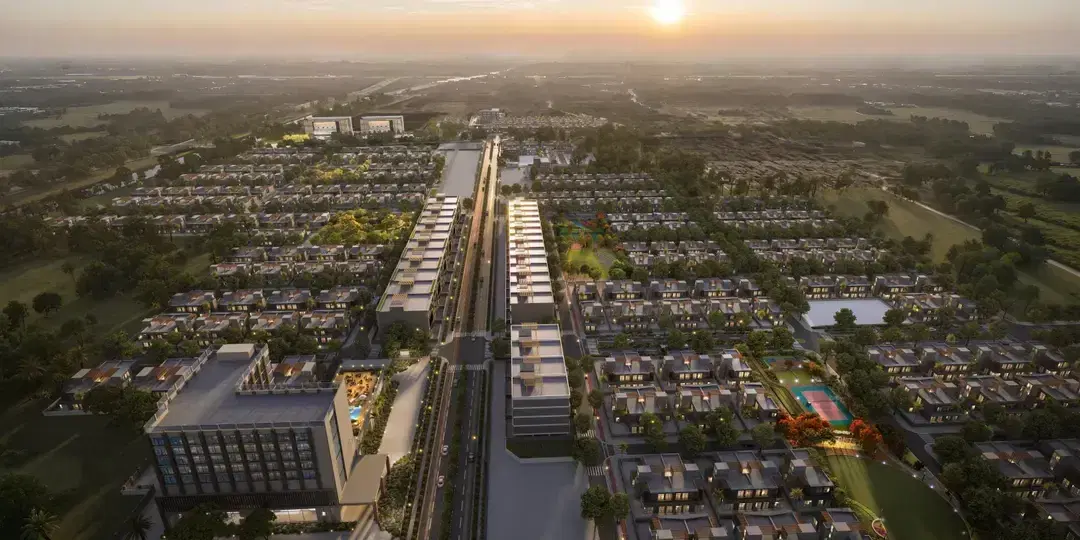
The Weight of a Promise: Trident Parktown is Now RERA Approved
In the world of real estate, a project begins long before the first brick is laid. It begins with a promise. For the discerning homebuyer, that promise is a complex tapestry woven from architectural vision, lifestyle aspirations, and—most importantly—trust.

PROJECTS
Site Office
Trident Parktown,
Village Nizampur & Azizullapur,
Sector 19A & 40, Panipat, Haryana 132104
Corporate Office
Trident Realty,
16th Floor, DLF Square, DLF Phase-II, Jacaranda Marg
Gurugram-122002, Haryana (India)
© TRIDENT PARKTOWN PVT LIMITED, 2026 All rights reserved
The Developer has availed a construction loan from IndusInd Bank Ltd. (‘IBL’), and has mortgaged project land admeasuring 59.77084 acres and any structures built thereon to such lender, where necessary No Objection Certificates (NOCs) shall be provided by IBL, as per requirement.
Carefully Crafted By

PROJECTS
MEDIA CENTER


Site Office
Trident Parktown, Village Nizampur & Azizullapur, Sector 19A & 40, Panipat, Haryana 132104

Corporate Office
Trident Realty, 16th Floor, DLF Square, DLF Phase-II, Jacaranda Marg Gurugram-122002, Haryana (India)
© TRIDENT PARKTOWN PVT LIMITED, 2026 All rights reserved
The Developer has availed a construction loan from IndusInd Bank Ltd. (‘IBL’), and has mortgaged project land admeasuring 59.77084 acres and any structures built thereon to such lender, where necessary No Objection Certificates (NOCs) shall be provided by IBL, as per requirement.
Carefully Crafted By